Nov 02, 2026
Access to reliable electricity remains a practical challenge for many remote communities, rural businesses, farms, schools, healthcare facilities, and infrastructure projects across Africa. In areas where grid connections are unavailable, unreliable, or expensive to extend, solar power offers a flexible way to generate electricity close to where it is needed.
The best solar energy solutions for Africa are not necessarily the largest or most expensive systems. They are systems designed around local energy demand, sunlight availability, weather conditions, installation requirements, battery storage needs, and long-term maintenance. A well-designed off-grid solar system can support lighting, water pumps, refrigeration, communications, small businesses, and other essential loads without depending entirely on a conventional power grid.
For project developers, distributors, EPC contractors, and solar installers, choosing a reliable solar supplier is just as important as selecting the equipment itself. PNG Solar provides photovoltaic modules, lithium batteries, inverters, and integrated solar energy systems for residential, commercial, and industrial applications. This guide explains what to consider when sourcing solar equipment for remote areas in Africa and how to select a solution that fits the project.
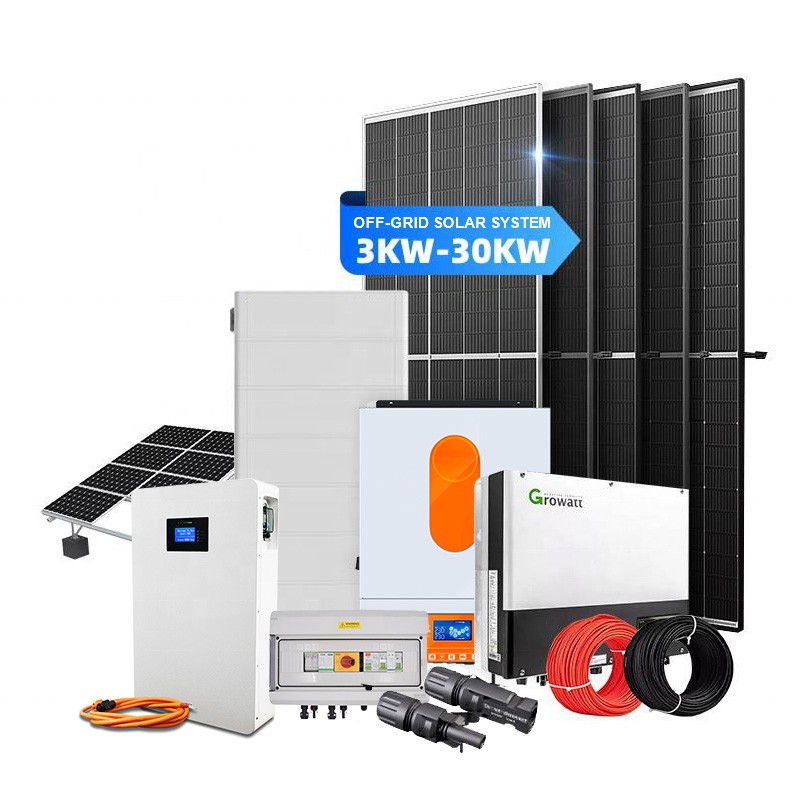
An integrated off-grid solar system combines PV modules, battery storage, and power conversion equipment.
Why Solar Energy Is Important for Remote Areas in Africa
Extending electricity infrastructure to remote settlements can involve significant construction, transportation, and maintenance challenges. For isolated homes and businesses, connecting to the nearest grid may not be practical or economically attractive. Solar energy provides an alternative by generating electricity at or near the point of consumption.
Africa also has substantial solar energy potential, although actual solar generation varies by location, season, weather, shading, and system design. A solar installation in northern Africa may experience different temperature and dust conditions from a project in coastal West Africa or the highlands of East Africa. These differences should be considered when selecting equipment and planning system capacity.
Solar power can support several important applications in remote areas:
Rural households: Lighting, fans, refrigeration, mobile phone charging, televisions, and other daily electrical needs.
Agriculture: Water pumping, irrigation, livestock facilities, crop storage, and farm equipment.
Healthcare facilities: Lighting, vaccine refrigeration, medical equipment, and communication systems.
Education: Classroom lighting, computers, internet access, and digital learning equipment.
Commercial operations: Shops, workshops, warehouses, small factories, and rural service businesses.
Telecommunications: Power for communication equipment and remote network infrastructure.
The key advantage is flexibility. A solar installation can be designed for a single building, a group of homes, an agricultural site, or a larger commercial facility. Battery storage can be added when electricity is needed outside daylight hours or when backup power is important.
What Are the Best Solar Energy Solutions for Africa?
The best solar energy solution for a remote African project depends on its connection to the grid, electricity consumption, available installation space, budget, and required operating hours. In most cases, buyers should compare three main system types: off-grid solar systems, hybrid solar systems, and commercial energy storage solutions.
Off-Grid Solar Systems for Remote Communities
An off-grid solar system operates independently of the public electricity grid. It generally includes solar panels, an off-grid inverter or charge controller, battery storage, mounting structures, and electrical protection components.
During daylight hours, the PV modules generate electricity to supply connected loads and charge the batteries. Stored energy can then be used at night or when sunlight is insufficient. This configuration is particularly useful for remote homes, farms, rural facilities, and locations where grid electricity is unavailable.
For smaller residential and rural applications, PNG Solar offers a 4KW–6KW off-grid solar system configuration with lithium battery storage and a Voltronic inverter. Its published product information includes 51.2V battery options with 5.2kWh and 10.5kWh nominal capacities. The appropriate configuration depends on the site's daily energy demand and required backup duration.
Explore the PNG Solar 4KW–6KW off-grid solar system for residential and small project applications.
Hybrid Solar Systems for Flexible Power Supply
A hybrid solar system combines photovoltaic generation and battery storage with a grid connection or another backup power source, depending on its configuration. It can use solar electricity first, store surplus generation, and draw power from an alternative source when required.
This setup can be useful for businesses, hotels, schools, farms, and residential properties that have access to a grid or generator but want to reduce dependence on conventional electricity sources. It also provides more flexibility when solar generation changes throughout the day.
For locations with an unreliable grid, a properly configured hybrid system can help maintain power to selected loads during interruptions. Buyers should confirm that the inverter supports the intended backup operation, battery communication, and generator or grid integration.
PNG Solar supplies hybrid solar energy systems for residential and larger commercial applications.
Commercial and Industrial Solar Energy Storage
Large farms, factories, warehouses, commercial buildings, and infrastructure projects may require more than a small standalone solar installation. These sites often need higher power output, larger battery capacity, coordinated energy management, and dedicated electrical protection.
Commercial and industrial energy storage systems can store solar electricity for later use, support selected critical loads, and help manage electricity demand. In locations with an available grid, they may also support energy shifting and peak-demand management, subject to local tariffs and grid regulations.
PNG Solar offers integrated commercial storage configurations, including 50KW systems with nominal battery capacities of approximately 100kWh and 114kWh. These systems use lithium iron phosphate battery chemistry and an integrated cabinet design.
For larger project requirements, review PNG Solar's 50KW commercial and industrial energy storage system.
An integrated battery cabinet for commercial and industrial energy storage projects.
How to Choose Solar Panels for African Climate Conditions
Solar panels used in African projects may face high ambient temperatures, dust accumulation, strong sunlight, seasonal rainfall, humidity, and, in coastal locations, salt exposure. The correct panel selection should therefore consider more than rated wattage.
When comparing photovoltaic modules, buyers should review the following specifications:
Power output: Higher-wattage modules may help reduce the number of panels and mounting connections required for a given array capacity, subject to electrical design and available space.
Module efficiency: Higher efficiency can be useful when roof or installation space is limited.
Temperature coefficient: This indicates how module power changes as cell temperature rises above the reference condition.
Mechanical strength: Check the module's certified mechanical load ratings and suitability for the local wind and installation conditions.
Environmental resistance: Review relevant testing and product specifications for humidity, dust, salt mist, and other site conditions.
Warranty: Check the product warranty and power performance warranty separately, including the terms and exclusions.
N-type TOPCon and bifacial photovoltaic modules are options worth evaluating for suitable African projects. Bifacial modules can generate additional electricity from reflected light on the rear side when the mounting design and ground conditions support useful rear-side irradiance. The actual gain depends on albedo, module height, spacing, shading, and installation layout.
PNG Solar supplies N-type TOPCon photovoltaic modules, including high-power and bifacial product options. Buyers can explore the PNG Solar PV module product range and compare available specifications for their project.
Why Battery Storage Matters for Remote Solar Projects
Solar panels generate electricity when sunlight is available, but many remote facilities need power after sunset. Battery storage bridges this gap by storing surplus electricity during the day and supplying it when solar production falls.
Lithium iron phosphate (LiFePO4) batteries are widely used in stationary solar storage because of their thermal stability and cycle-life characteristics. Their suitability for a particular project still depends on cell quality, battery management, charging conditions, operating temperature, and system design.
When selecting a solar battery for Africa, consider:
Usable capacity: Select enough usable kWh to support the intended loads during the required period.
Depth of discharge: Follow the manufacturer's recommended operating range rather than assuming all nominal battery capacity is available.
Operating temperature: Check charging and discharging temperature limits and whether thermal management is needed.
Battery management system: Confirm protection against abnormal voltage, current, temperature, and cell imbalance.
Inverter compatibility: Verify battery voltage, current limits, and BMS communication protocols.
Expansion capability: Check whether additional battery modules can be connected if energy demand increases.
For example, PNG Solar's residential off-grid system page lists 51.2V lithium battery options with 5.2kWh and 10.5kWh nominal capacities, and a stated cycle life of 6,000 cycles under specified test conditions. These figures apply to the listed product configuration and should not be treated as universal performance guarantees for all battery installations.
Explore PNG Solar's lithium battery and energy storage products to compare battery options for different solar applications.
Solar Solutions for Agriculture and Water Pumping
Agriculture is an important application for solar energy in remote African areas. Farms may need electricity for irrigation, livestock watering, crop processing, refrigeration, lighting, and equipment operation. In locations where grid access is limited, solar power can reduce dependence on fuel-based generation.
Solar water pumping is one practical example. A PV array can power a suitable pump during daylight hours, moving water to an irrigation system or storage tank. Where water is stored in a tank, the system may be able to use solar power directly without requiring a large battery solely for nighttime pumping.
A proper pump system design should consider the water source, required daily water volume, total dynamic head, pipe length, pump efficiency, seasonal water availability, and daily solar irradiation. These details determine the required PV capacity and pump selection.
For farms that also require evening electricity for lighting, refrigeration, security, or processing equipment, battery storage can be added as part of a broader solar power solution. Separating daytime pumping demand from nighttime electrical demand often makes system sizing more efficient.
Solar Power for Rural Healthcare, Schools, and Small Businesses
Reliable electricity can make a meaningful difference to essential services in remote communities. Healthcare facilities may need power for lighting, vaccine refrigeration, medical equipment, communications, and basic administrative operations. Schools may need electricity for classrooms, computers, internet equipment, and evening study areas.
Small businesses also benefit from a stable power supply. Shops, food businesses, repair workshops, and rural service centers may depend on refrigeration, lighting, charging equipment, and small machinery to operate consistently.
For these applications, system design should prioritize critical loads. A healthcare facility, for example, may need a dedicated backup circuit for refrigeration and essential medical equipment. A school may have a different load profile, with higher demand during daytime teaching hours.
Rather than installing the same solar configuration for every building, project developers should prepare a load list, estimate daily energy use, identify peak power requirements, and decide how many hours of backup are necessary. This provides a more reliable basis for selecting panels, inverters, and batteries.
How to Choose a Reliable Solar Supplier for Africa
Choosing a reliable solar supplier is an important part of any remote-area project. Even technically suitable equipment can create problems if product documentation is incomplete, components are incompatible, spare parts are difficult to obtain, or technical support is unavailable when needed.
Before placing an order, buyers, distributors, and EPC contractors should evaluate several areas.
Product Range and System Integration
A supplier with experience across PV modules, batteries, inverters, and complete solar systems can make equipment selection and system coordination easier. Buyers should still confirm that the proposed components are compatible and that the supplier can provide the technical information required for installation.
Certifications and Technical Documentation
Request relevant datasheets, test reports, product certificates, warranty documents, and installation manuals. For PV modules, check applicable IEC testing and destination-market requirements. For lithium batteries, review relevant safety and transportation documentation, including UN 38.3 where applicable.
Do not rely on a general company certificate as proof that every product model meets the same requirements. Verify the model number, certificate scope, issuing organization, and validity.
Manufacturing and Quality Control
Ask about manufacturing facilities, production procedures, inspection processes, component sourcing, and quality control records. A supplier should be able to explain how products are tested and how defects or quality issues are handled.
Warranty and After-Sales Support
Remote installations can be expensive to service, especially when replacement parts must travel long distances. Before purchasing, clarify warranty coverage, troubleshooting procedures, technical response channels, spare parts availability, and the process for handling faulty equipment.
Export and Logistics Experience
International solar projects require careful shipping and documentation planning. Buyers should confirm packaging standards, shipping terms, lead times, export documents, battery transportation requirements, and the availability of technical documentation for customs clearance and local installation.
A dependable supplier should be willing to discuss these points before the order is confirmed, rather than leaving important project details until the equipment is ready to ship.
Important Factors When Installing Solar Systems in Remote African Locations
A solar system designed for a remote location needs to account for local conditions from the beginning. Transportation, site access, installation skills, security, maintenance, and environmental exposure can all affect long-term performance.
High temperatures: Review the operating temperature limits of modules, batteries, and inverters. Provide appropriate ventilation or cooling where required.
Dust and sand: Consider panel cleaning access, equipment enclosure protection, air filtration, and maintenance intervals.
Heavy rainfall and humidity: Check enclosure ratings, cable entries, drainage, mounting design, and protection against moisture.
Coastal environments: Evaluate corrosion resistance for mounting structures, connectors, fasteners, and exposed electrical equipment.
Lightning and electrical surges: Design suitable grounding, bonding, and surge protection according to local standards and site risk.
Security: Consider equipment placement, secure mounting, fencing, and protection against unauthorized access.
Maintenance access: Select equipment that local technicians can inspect, monitor, and service with available tools and replacement parts.
For remote installations, simplicity and serviceability matter. A system that is easy to monitor, troubleshoot, and maintain may be more practical than a complicated configuration with features the local operator cannot use.
How to Size a Solar Power System for a Remote Project
Correct system sizing begins with an assessment of electricity demand. List every appliance or piece of equipment, its rated power, expected operating hours, and whether it must run during the day or at night.
For a preliminary energy estimate, use:
Daily energy consumption
Appliance power (kW) × Operating hours per day = Daily energy use (kWh)
Total system demand = Sum of the daily energy use of all connected loads.
For example, a remote facility uses 2 kW of equipment for 5 hours each day and another 1 kW of lighting and communication equipment for 6 hours.
Daily energy consumption = (2 × 5) + (1 × 6) = 16 kWh per day.
This is the energy demand at the load side. The PV array must generate additional electricity to account for system losses and battery charging. The battery capacity must be based on the energy required during periods without sufficient solar production, together with the permitted depth of discharge and operating reserve.
The inverter must also support the maximum simultaneous load and any starting surge from motors, pumps, or compressors. For locations with several consecutive cloudy days, consider additional solar capacity, larger storage, load management, or an alternative backup source.
For project buyers, PNG Solar's off-grid solar system range provides a starting point for comparing configurations for remote residential and commercial applications.
PNG Solar Solutions for African Distributors and Project Developers
PNG Solar, operated by Hefei Pinergy Solar Technology Co., Ltd., was founded in 2017 and focuses on the manufacturing and supply of photovoltaic modules, energy storage products, and solar power systems. Its product range covers PV modules, lithium batteries, inverters, and integrated solar solutions.
For African solar distributors, installers, and project developers, this product coverage provides options for evaluating different project scales, from residential off-grid installations to commercial and industrial storage systems.
For example, PNG Solar publishes a 100KW power conversion system with a 215KWH LiFePO4 battery cabinet. The product information identifies an outdoor cabinet design, IP54 protection, a battery management system, and integrated storage equipment. These specifications should be checked against the actual installation environment and project requirements.
View the PNG Solar 100KW / 215KWH commercial energy storage cabinet for its published technical information.
PNG Solar also provides larger integrated storage configurations, including a 125KW / 241KWH LiFePO4 cabinet for commercial and industrial applications. This type of solution may be evaluated for facilities with higher power and energy requirements, subject to load analysis and engineering review.
For distributors and EPC contractors sourcing solar equipment for African markets, PNG Solar's complete solar product portfolio provides access to different equipment categories for project planning and product comparison.
The right solution is determined by the actual application, not simply by the product's rated capacity. Share the project location, daily electricity demand, required power output, backup duration, installation conditions, and preferred system type when requesting technical recommendations.
Conclusion: Choosing the Right Solar Supplier for Africa
Reliable solar energy solutions can help remote communities, farms, businesses, and public facilities gain access to electricity without depending entirely on conventional grid infrastructure. However, long-term project performance depends on more than solar panel capacity. Battery storage, inverter compatibility, installation quality, environmental protection, system sizing, and maintenance planning all play important roles.
When choosing a solar supplier for Africa, buyers should look for a company that can provide clear product specifications, relevant technical documentation, compatible system components, dependable export support, and practical solutions for different project requirements.
PNG Solar supplies photovoltaic modules, lithium batteries, inverters, and integrated solar energy systems for residential, commercial, and industrial applications. Whether you are planning an off-grid installation for a remote property or sourcing energy storage equipment for a larger project, explore PNG Solar's solar energy solutions to identify suitable products for your market.
A reliable solar project starts with a clear understanding of local energy needs and a supplier capable of supporting the equipment requirements from product selection through delivery and technical coordination.
Frequently Asked Questions About Solar Energy Solutions in Africa
What are the best solar energy solutions for remote areas in Africa?
Off-grid solar systems are suitable for locations without reliable grid access. They typically combine solar panels, an inverter, and battery storage. Hybrid systems may be more suitable when a grid or generator is available as an additional power source. The right solution depends on energy demand, backup requirements, local climate, and project budget.
Why are off-grid solar systems useful in rural Africa?
Off-grid solar systems generate electricity locally without requiring a connection to the public grid. They can support homes, farms, schools, healthcare facilities, and small businesses in remote locations where grid extension is difficult or unavailable.
Which battery is suitable for solar energy storage in Africa?
LiFePO4 lithium batteries are widely used in stationary solar storage because of their thermal stability and cycle-life characteristics. Buyers should compare usable capacity, operating temperature, BMS protection, inverter compatibility, warranty terms, and applicable safety documentation.
How many solar panels are needed for a remote home?
The required number depends on daily electricity consumption, panel wattage, local peak sun hours, system losses, shading, and seasonal weather. Calculate daily energy demand first, estimate realistic solar production, and then determine the required PV array capacity.
Can solar power operate water pumps and irrigation systems?
Yes. Solar photovoltaic systems can power compatible water pumps and irrigation equipment. Proper sizing requires information about water volume, pumping head, operating hours, pump efficiency, and available solar generation.
What should buyers check before choosing a solar supplier in Africa?
Buyers should review product specifications, manufacturing quality, relevant certifications, warranty terms, inverter and battery compatibility, export experience, shipping documentation, spare parts availability, and after-sales technical support.
Are solar panels suitable for hot and dusty African environments?
Yes, provided the selected modules and system components are suitable for the local conditions. Buyers should check temperature coefficients, mechanical load ratings, environmental test documentation, inverter operating limits, enclosure protection, and maintenance requirements. Dust accumulation should also be included in the maintenance plan.
Does PNG Solar supply off-grid and commercial solar systems for African projects?
PNG Solar supplies off-grid solar systems, hybrid solar systems, photovoltaic modules, lithium batteries, and commercial and industrial energy storage products. Project buyers can review the published product specifications and contact PNG Solar to discuss suitable configurations.
{
"@context": "https://schema.org",
"@type": "FAQPage",
"mainEntity": [
{
"@type": "Question",
"name": "What are the best solar energy solutions for remote areas in Africa?",
"acceptedAnswer": {
"@type": "Answer",
"text": "Off-grid solar systems are suitable for locations without reliable grid access. They typically combine solar panels, an inverter, and battery storage. Hybrid systems may be more suitable when a grid or generator is available as an additional power source. The right solution depends on energy demand, backup requirements, local climate, and project budget."
}
},
{
"@type": "Question",
"name": "Why are off-grid solar systems useful in rural Africa?",
"acceptedAnswer": {
"@type": "Answer",
"text": "Off-grid solar systems generate electricity locally without requiring a connection to the public grid. They can support homes, farms, schools, healthcare facilities, and small businesses in remote locations where grid extension is difficult or unavailable."
}
},
{
"@type": "Question",
"name": "Which battery is suitable for solar energy storage in Africa?",
"acceptedAnswer": {
"@type": "Answer",
"text": "LiFePO4 lithium batteries are widely used in stationary solar storage because of their thermal stability and cycle-life characteristics. Buyers should compare usable capacity, operating temperature, BMS protection, inverter compatibility, warranty terms, and applicable safety documentation."
}
},
{
"@type": "Question",
"name": "How many solar panels are needed for a remote home?",
"acceptedAnswer": {
"@type": "Answer",
"text": "The required number depends on daily electricity consumption, panel wattage, local peak sun hours, system losses, shading, and seasonal weather. Calculate daily energy demand first, estimate realistic solar production, and then determine the required PV array capacity."
}
},
{
"@type": "Question",
"name": "Can solar power operate water pumps and irrigation systems?",
"acceptedAnswer": {
"@type": "Answer",
"text": "Yes. Solar photovoltaic systems can power compatible water pumps and irrigation equipment. Proper sizing requires information about water volume, pumping head, operating hours, pump efficiency, and available solar generation."
}
},
{
"@type": "Question",
"name": "What should buyers check before choosing a solar supplier in Africa?",
"acceptedAnswer": {
"@type": "Answer",
"text": "Buyers should review product specifications, manufacturing quality, relevant certifications, warranty terms, inverter and battery compatibility, export experience, shipping documentation, spare parts availability, and after-sales technical support."
}
},
{
"@type": "Question",
"name": "Are solar panels suitable for hot and dusty African environments?",
"acceptedAnswer": {
"@type": "Answer",
"text": "Yes, provided the selected modules and system components are suitable for the local conditions. Buyers should check temperature coefficients, mechanical load ratings, environmental test documentation, inverter operating limits, enclosure protection, and maintenance requirements. Dust accumulation should also be included in the maintenance plan."
}
},
{
"@type": "Question",
"name": "Does PNG Solar supply off-grid and commercial solar systems for African projects?",
"acceptedAnswer": {
"@type": "Answer",
"text": "PNG Solar supplies off-grid solar systems, hybrid solar systems, photovoltaic modules, lithium batteries, and commercial and industrial energy storage products. Project buyers can review the published product specifications and contact PNG Solar to discuss suitable configurations."
}
}
]
}
```



 给我们发电子邮件
 致电我们
 地址


 网络支持